
A Sensory Garden in France
Interview with Gwen from Garden Jardin Sensoriel, France
November 2023
Gwen's garden is located in Douvrend, a beautiful small village near Dieppe in Normandy, France. Most visitors come from France, but it is also possible to visit the garden if you are travelling from the UK. The ferry that sails from Dieppe to Newhaven in the UK provides easy access for visitors from southern England.
Gwen started her dog business eight years ago.
Gwen said:
"I started my dog school after I got a dog ten years ago. My husband came home with a dog in his arms, and that was the first dog in my life. I took my dog to a dog school, but I quickly realised, 'This is not the way I want dogs to be trained.' After two lessons, I stopped and started reading books in French and English. I thought, 'Why not become a dog trainer myself?' because I wanted to do things differently.
I spent two and a half years studying to become a dog trainer. However, it still was not what I was looking for until I discovered Turid Rugaas and Pet Dog Trainers of Europe (PDTE). I learned that less is more. I stopped training dogs and started offering consultancy instead."
Gwen has two dogs: Toby, a two-year-old Continental Bulldog, and Upy, a six-month-old Golden Retriever.
Sensory Garden 4 Dogs: When did you open your garden?
Gwen: Almost three years ago, in January 2021.
Sensory Garden 4 Dogs: What does it look like?
Gwen: It is a large area of 5,500 m². You can walk throughout the entire space. It is completely fenced, with fences of different heights, the lowest being 1.5 metres, combined with hedges.
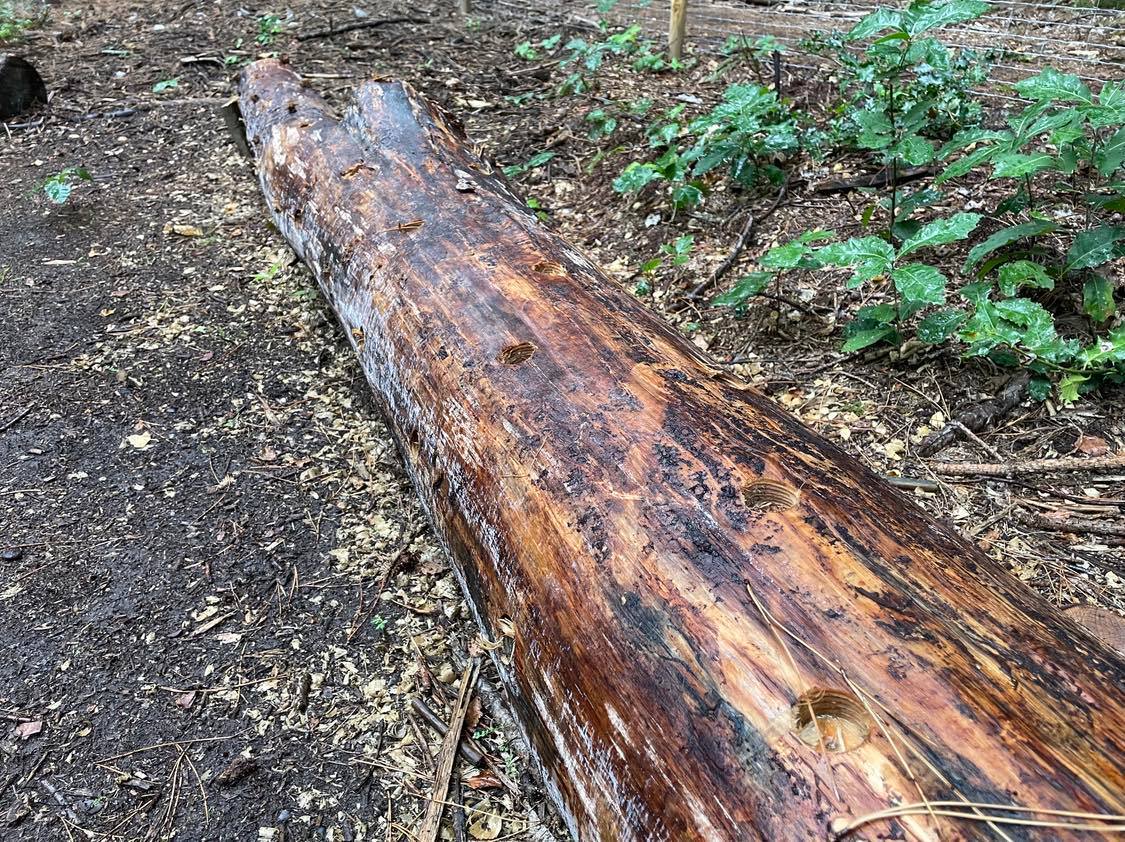
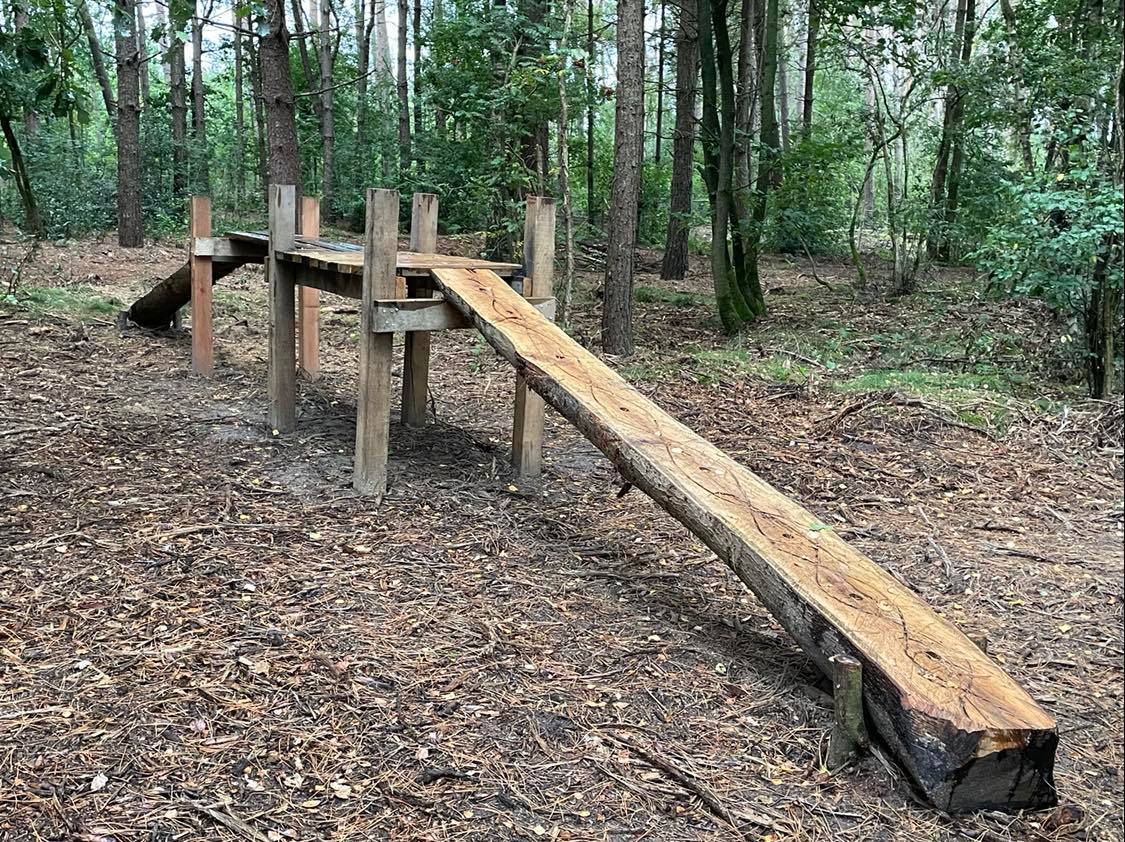
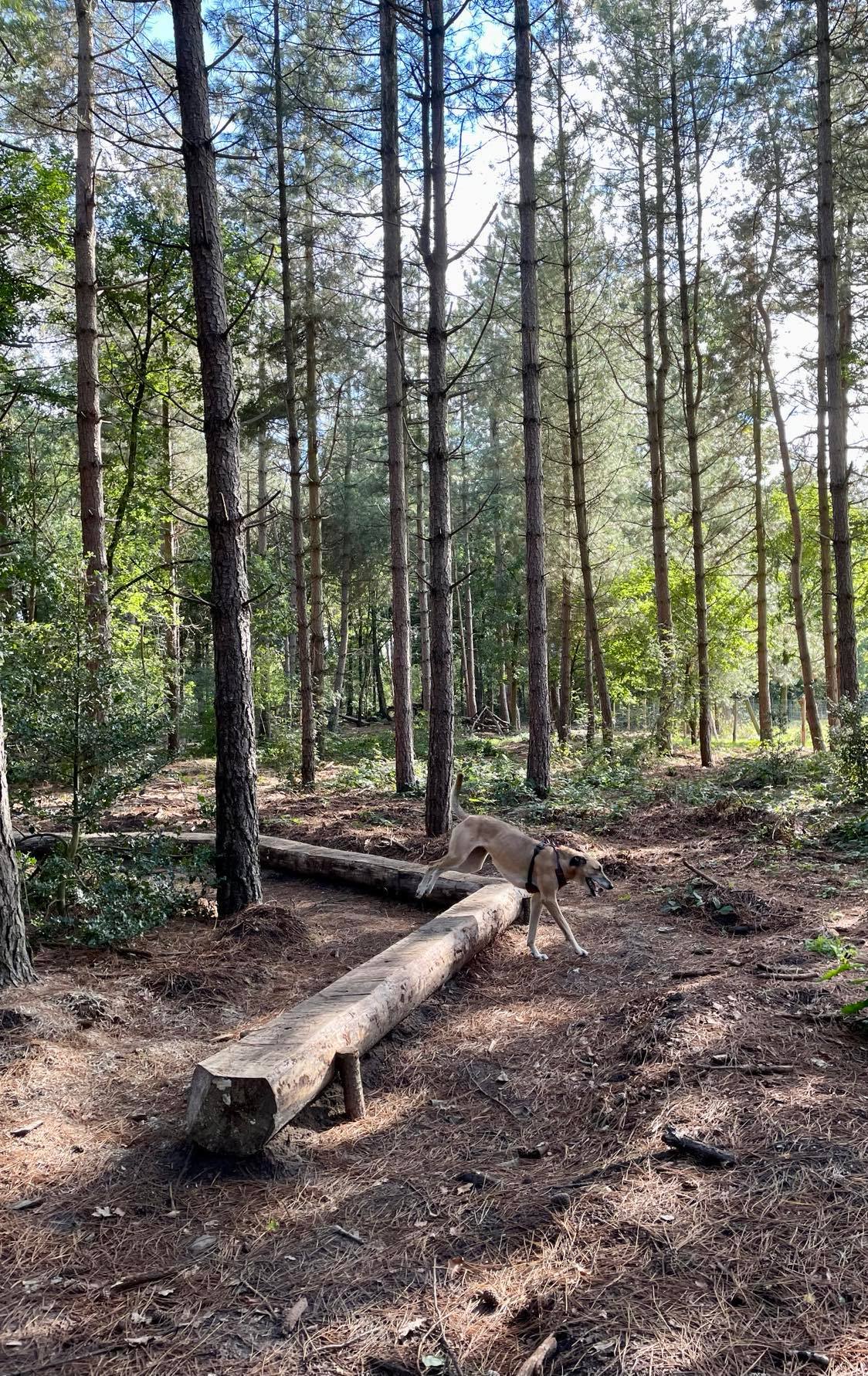
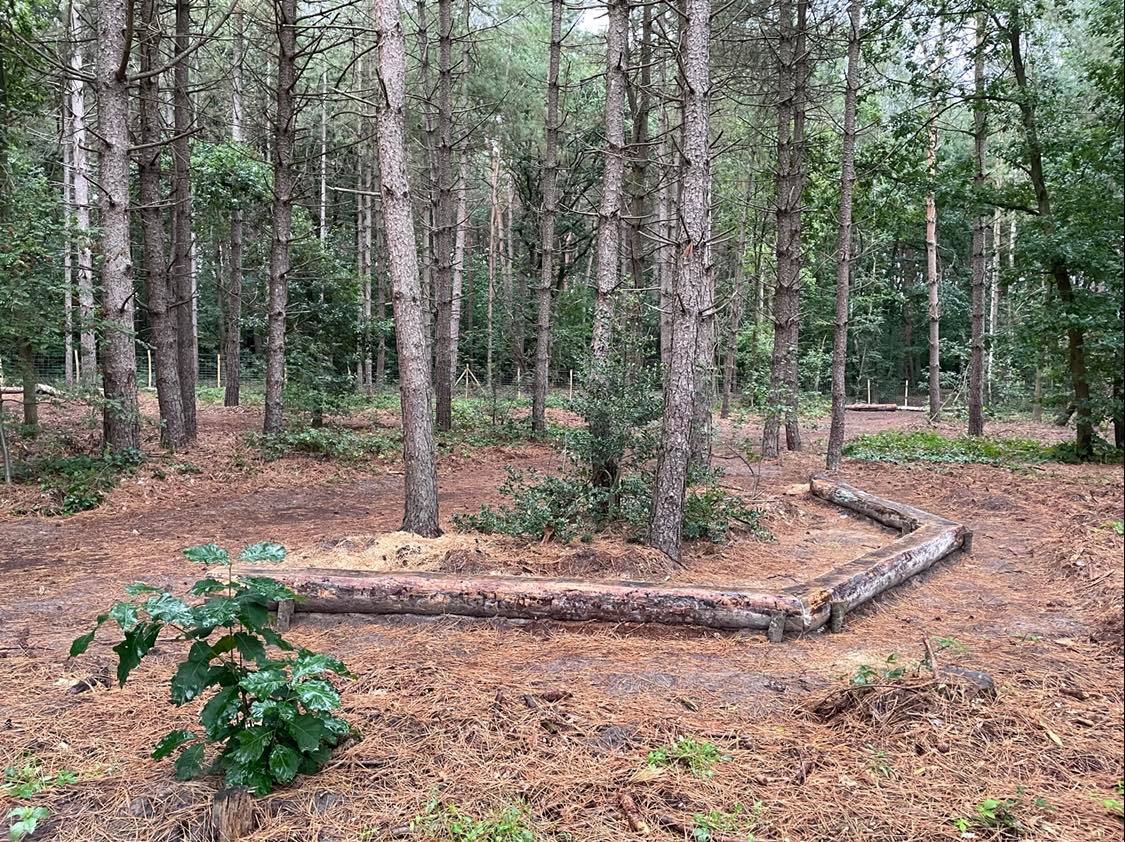
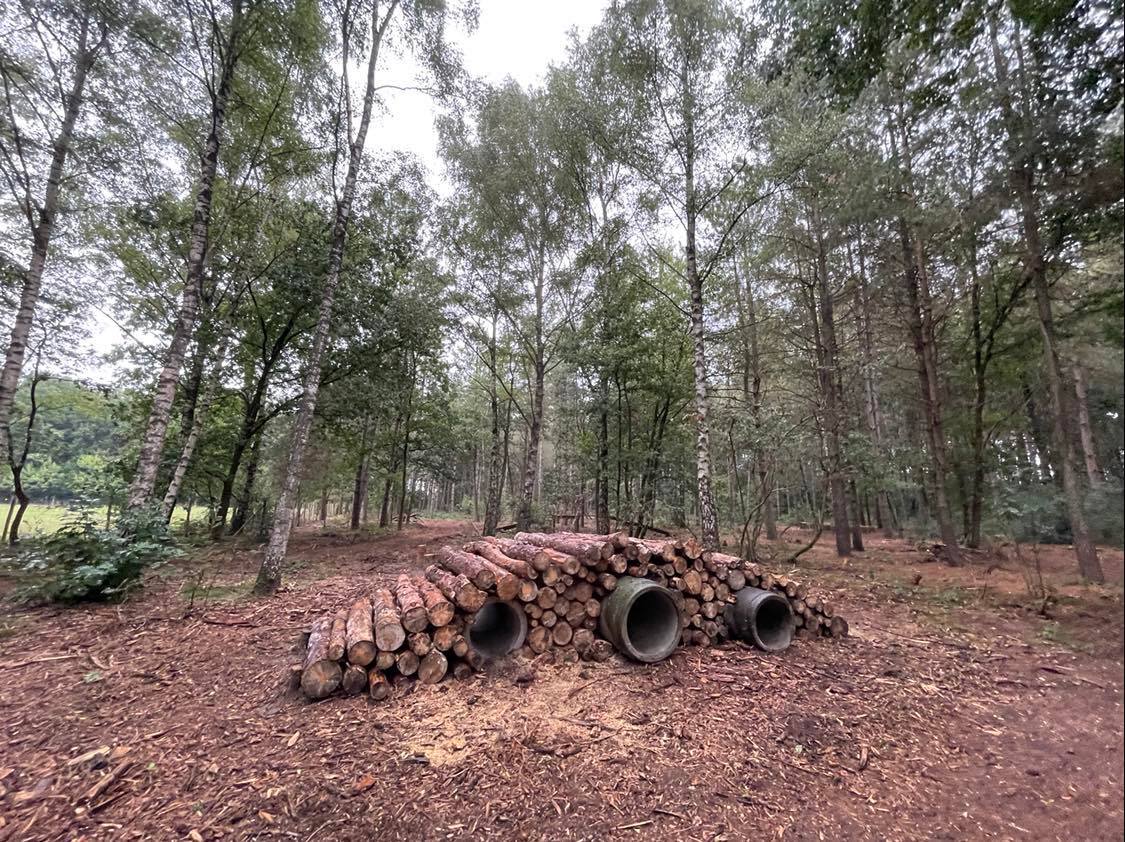
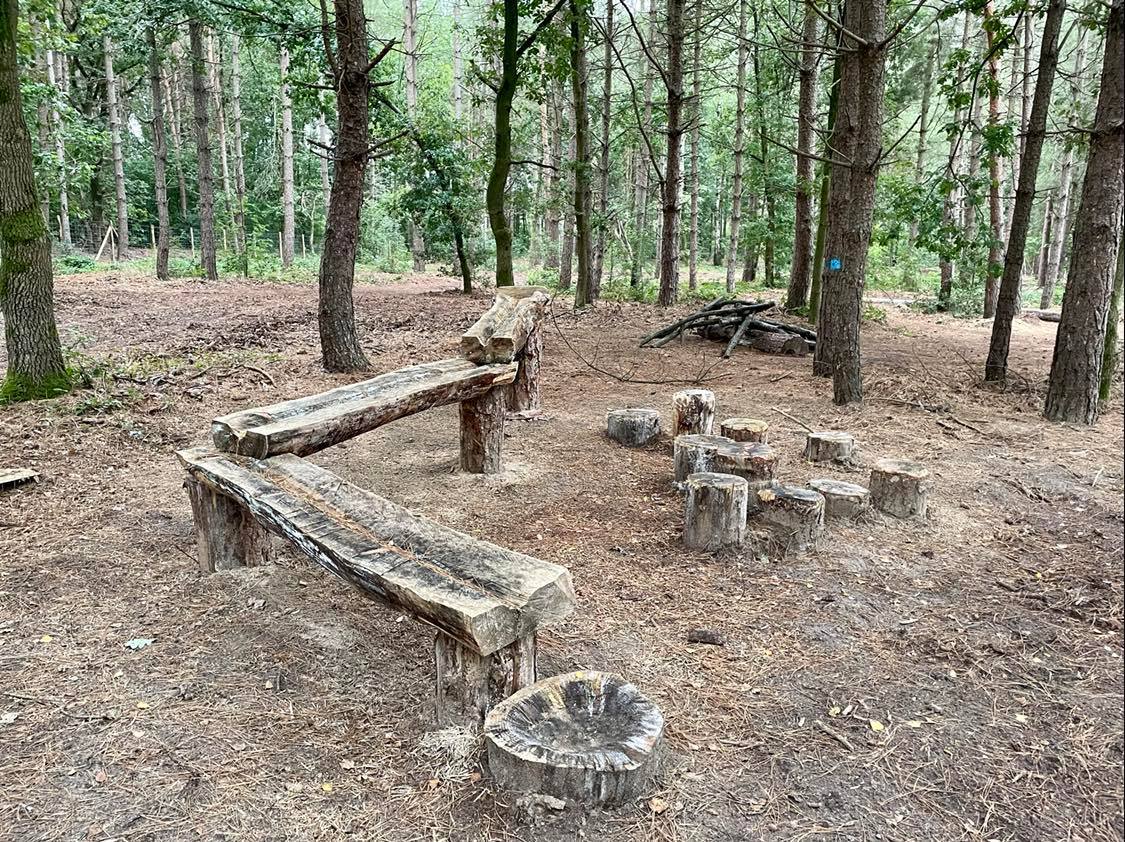
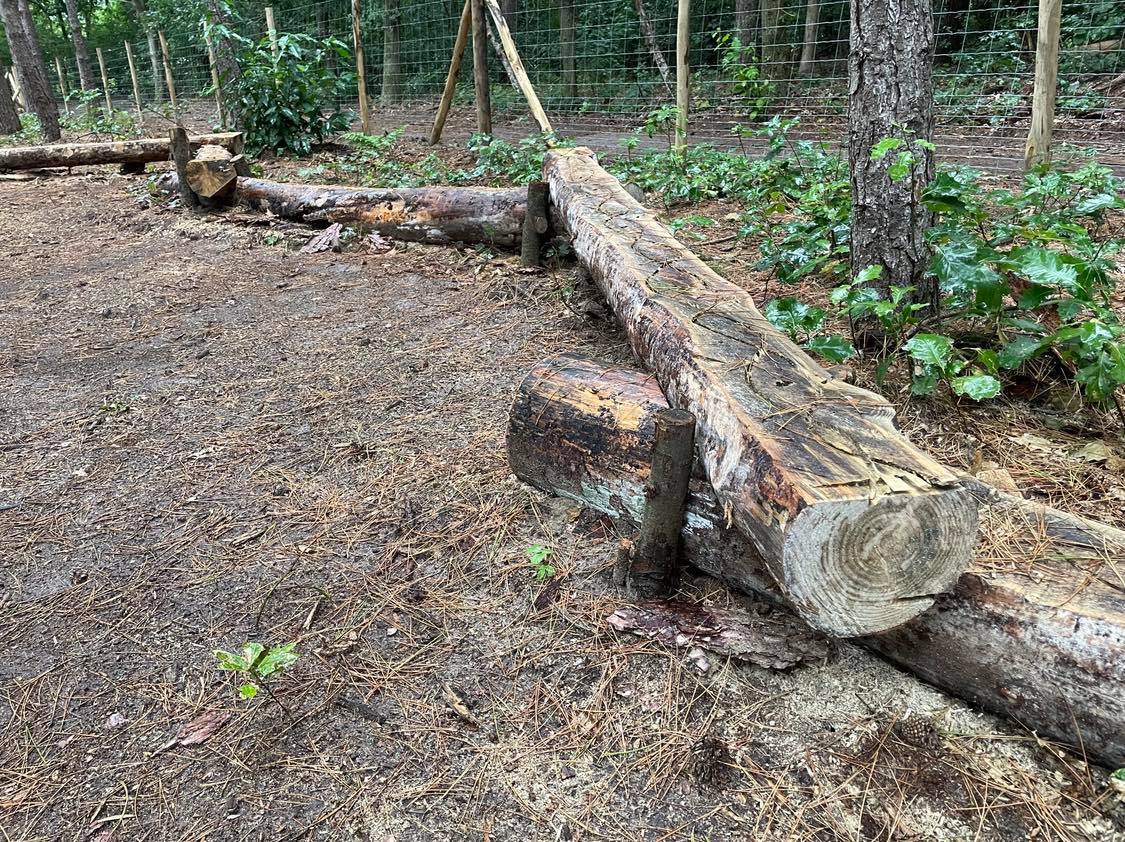
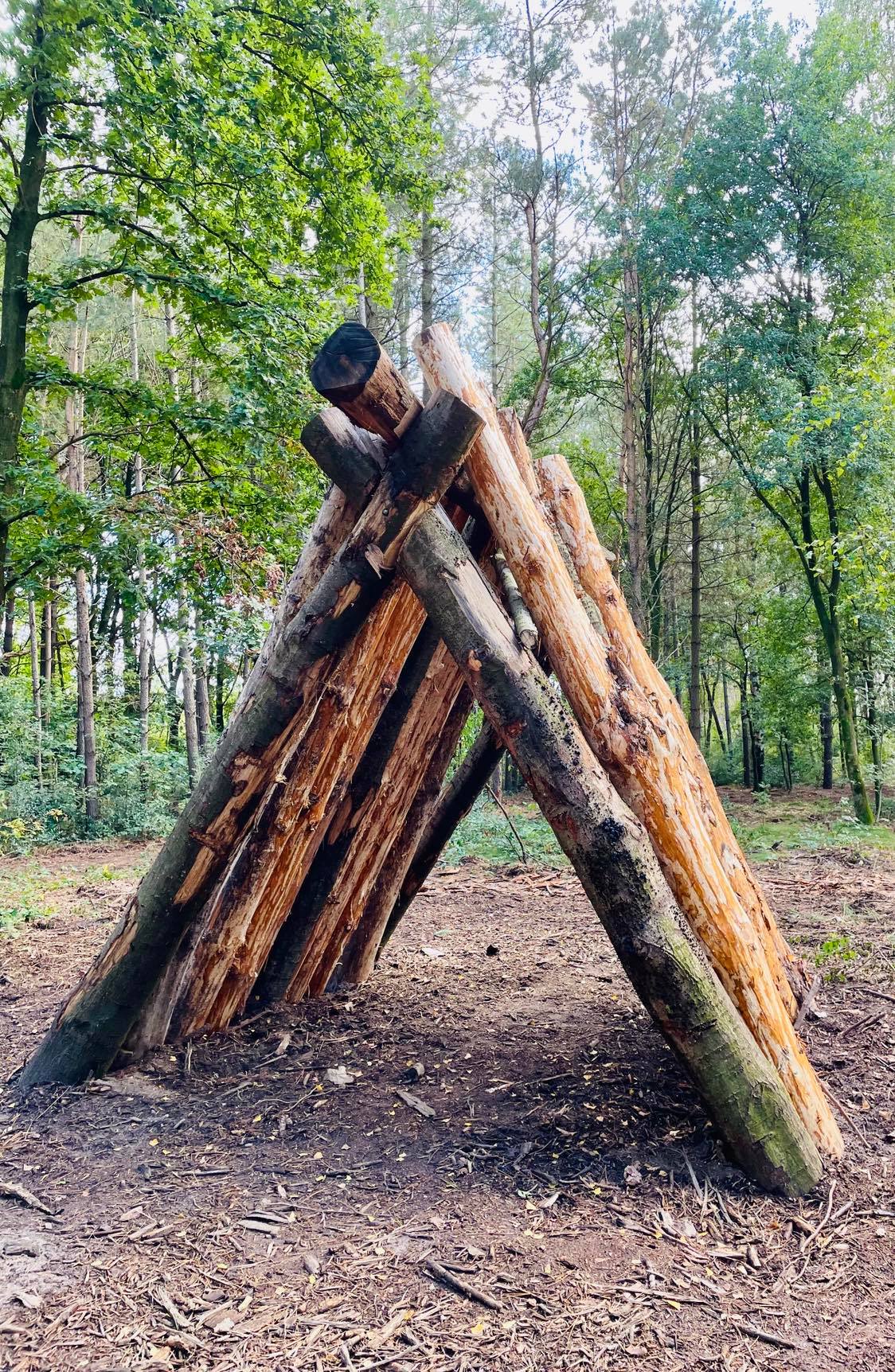
There is a large walnut tree and several apple trees. There is also a small house with seating areas, and it is fully accessible to the dogs. There are wooden crates, platforms, and dog ramps, similar to those used to help older dogs get into cars. I also place broomsticks on the ground so that dogs can walk over them.
For touch, there are many places where dogs can dig, as well as different surfaces such as scallop shells, artificial grass, beach pebbles, bubble wrap, doormats, and vet beds. I use various objects to enrich the environment, including umbrellas, buckets, and a wheelbarrow.
For scent, I use small tea infusers containing cotton wool with a drop of essential oil. I hang these on a line so that dogs can smell them. I also use different kinds of animal hair collected in a large ball. After each visit, I ask the dog's owner if I may brush their dog to collect hair and add it to the ball.
I also have animal visitors in the garden at night. I can observe this clearly because some dogs, especially hunting dogs, follow their scent trails.
On the other side of the road from the sensory garden there is a house with horses, dogs, and sheep. Dogs can smell these animals, which adds another scent element to the experience. Visitors can also see these animals, but even dogs that are reactive towards other dogs are usually not interested because the garden itself is so engaging.
For visual stimulation, I provide an enriched environment throughout the garden.
When people come to my sensory garden, they can drive their car directly inside the fenced area. I can then close the gate, allowing the dog to return to the car whenever it wishes to end the session.
For sound, there are natural noises such as birdsong, and I have placed a wind chime in one of the trees.
Sensory Garden 4 Dogs: What do you observe?
Gwen: It is interesting to observe how dogs move. I completed a basic course in Galen Myotherapy, so when dogs climb ramps, step over objects, or move through the garden, I can observe whether they are moving comfortably.
The way dogs sniff, walk, or avoid certain objects also provides a lot of information.
I usually do not use treats in my sensory garden, although it depends on the individual dog.
Before a visit, owners complete a questionnaire. I ask whether there are any behavioural concerns or other important things I should know. It is important for me to understand what type of dog is visiting. Based on this information, I can decide what kind and how much environmental enrichment to provide.
Environmental enrichment can be very valuable, but I am always careful because some dogs can become overwhelmed. Simply by observing dogs, you can learn more about who they are.
Every dog is different. Some dogs are interested only in natural elements, while others are more interested in enrichment objects.
Most dogs move through the garden slowly. They start exploring a small area and gradually expand their range until they have sniffed and explored the entire garden.
Sensory Garden 4 Dogs: What can visitors do during the session?
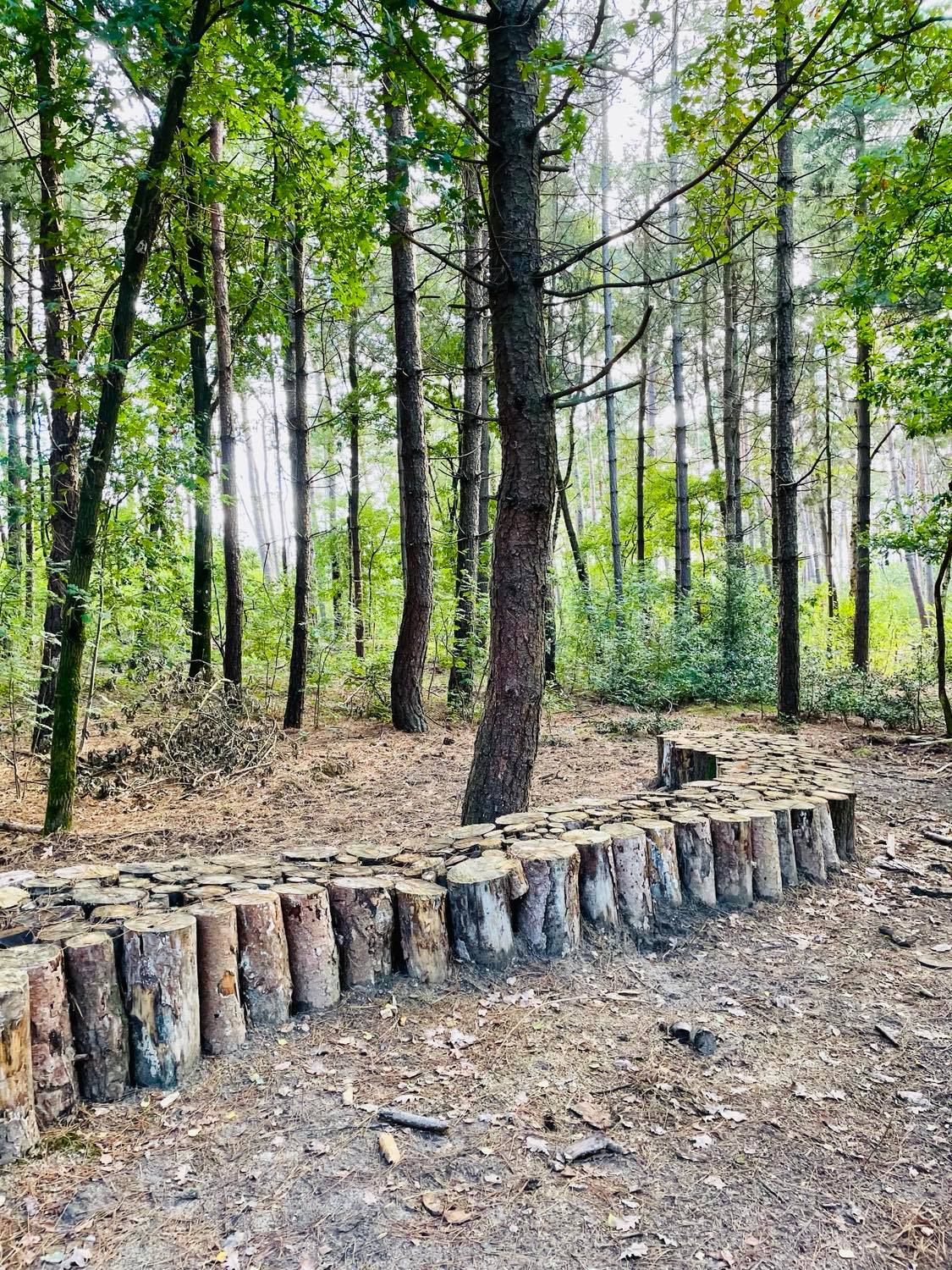
Gwen: People sit down. I have several seating areas, including logs where visitors can sit. They can listen to the birds singing or to the wind chime in the garden. It is a relaxing experience.
The idea is to be with your dog instead of constantly doing things with your dog. Simply enjoy your dog's presence.
Sensory Garden 4 Dogs: If a dog is not exploring, what do you do?
Gwen: Sometimes dogs are not exploring and need a little help. In those cases, I may suggest a treat search, or I ask the guardian to explore alongside the dog.
However, dogs first need time. I wait before offering any help. I do not interact, but I remain neutral rather than ignoring the dog. Most dogs figure out what to do on their own: sniff and explore.
This is important because I want dogs to become confident. I also help owners stop feeling the need to control their dogs all the time.
Sensory Garden 4 Dogs: How do you know when a dog is ready to go home?
Gwen: Dogs walk back to the car and look at their owner.
I then tell the owner that the dog is communicating that it is ready to go home.
It is important to let them relax.
In my experience, every dog, including highly active dogs, falls asleep in the car on the way home.
Sensory Garden 4 Dogs: What do you offer?
Gwen: I currently use the garden in three different ways.
1. Behaviour consultancy
I use the sensory garden for behavioural consultations because I can observe much more than during a visit to someone's home, unless the issue is directly related to the home environment. By observing dogs, I learn a great deal from how they interact with enrichment, how they sniff, and sometimes from what they choose to dig up or destroy. In my sensory garden, dogs are free to do what they want. Nothing is forbidden.
2. Independent garden visits
People can visit the sensory garden with their dog for 30 minutes. During these visits, I do not provide advice.
3. Guided garden visits
People can visit the sensory garden with their dog for 60 minutes. During these sessions, I am present and explain what I observe. I also provide information about equipment, such as Y-harnesses, and offer advice where appropriate.
Sensory Garden 4 Dogs: Do you have any rules, and do you inform people beforehand?
Gwen: I brief people when they arrive. I explain that this is their dog's moment and that nothing is forbidden.
You may watch your dog, and if your dog wants physical contact, that is fine. You may pet your dog. However, I ask people to avoid eye contact and not to talk to their dog unless the dog is struggling and needs support.
I encourage people to behave as naturally as possible.
Sensory Garden 4 Dogs: Have you seen positive effects on dogs in your sensory garden?
Gwen: People should let a dog be a dog.
Many people still think that tiring a dog out by throwing balls is the best approach. What surprises them is that after visiting my garden, their dog is tired even though it has been doing what appears to be "nothing".
That "nothing" is actually sniffing and exploring. I explain that dogs are constantly using their nose and brain, which means they are working mentally throughout the visit.
People often notice that their dogs are calmer the following day.
Sensory Garden 4 Dogs: What do dogs like most in your sensory garden?
Gwen: Every dog is different. Some enjoy digging, others prefer sniffing, while some like lying in the sun, rolling in the dirt, and then returning to sniffing.
Their genetics can also influence what they enjoy doing.
However, in general, many dogs enjoy rolling and digging.
Owners often see their dog differently after a visit. They learn more about what their dog genuinely enjoys.
Each breed may have certain preferences, but every dog is an individual.
Sensory Garden 4 Dogs: What kind of dogs visit your sensory garden?
Gwen: Most of the dogs I receive are reactive dogs. Owners appreciate having a safe place to visit.
Sensory Garden 4 Dogs: Do you have a special memory of a visitor?
Gwen: Every dog is special. It is a pleasure to watch and observe them.
You quickly notice that every dog is different and has its own personality.
Sensory Garden 4 Dogs: Why is your business called DogZenByGwen?
Gwen: Because it is important to me that dogs are able to relax and feel calm from the very beginning.
The "Zen" aspect is important because, to me, Zen means quiet, relaxed, and peaceful.
At the end of the day, I want to see happy, relaxed, and Zen dogs and humans.
Sensory Garden 4 Dogs: How can people find you and make a reservation?
Gwen: https://www.dogzenbygwen.com/
Facebook: https://www.facebook.com/dogzenbygwen
Thank you, Gwen, for this interview! 🌿🐾